The Hidden Hospital: A Story About Assumptions
The Hidden Hospital: A Story About Assumptions
It was Easter Monday, 2025. A sunny, relatively warm day, the kind that pulls you outdoors just to be in it. I went out to Crofton Forest with my son and my brother. We decided to play hide and seek, something light and fun to mark the long weekend.
We’d played the game many times before, and earlier that same day, they’d hidden several times. Each time, I found them quickly. It was playful and predictable. I thought I had the pattern down.
But then came the last round.
They vanished into the forest, and this time… nothing. No sign. No sound. They’d found a perfect hiding spot, and Crofton Forest can be surprisingly good for that. Especially near the stream that winds through it, where the undergrowth is dense and the trees cluster tightly. It’s easy to lose someone among the ferns and shadows.
As I wandered through the woods calling out, scanning the tree lines, I was stopped by two strangers.
“Have you lost your dog?” they asked. “No,” I smiled. “We’re looking for an old hospital,” one of them explained. “A smallpox hospital. It was here, back in the day. Closed in 1956.”
I paused for a moment, and I’ll admit it, my first reaction was that they were probably talking nonsense.
A hospital? Here? I’ve walked these woods for years. I thought I knew them. Surely I’d have noticed a hospital. It just didn’t fit the picture I had in my head. I nodded politely, but mentally, I dismissed it.
Eventually, my brother called and told me where they were hiding. We all laughed about how well they’d done. Game over.
But something about that brief exchange with the strangers stayed with me.
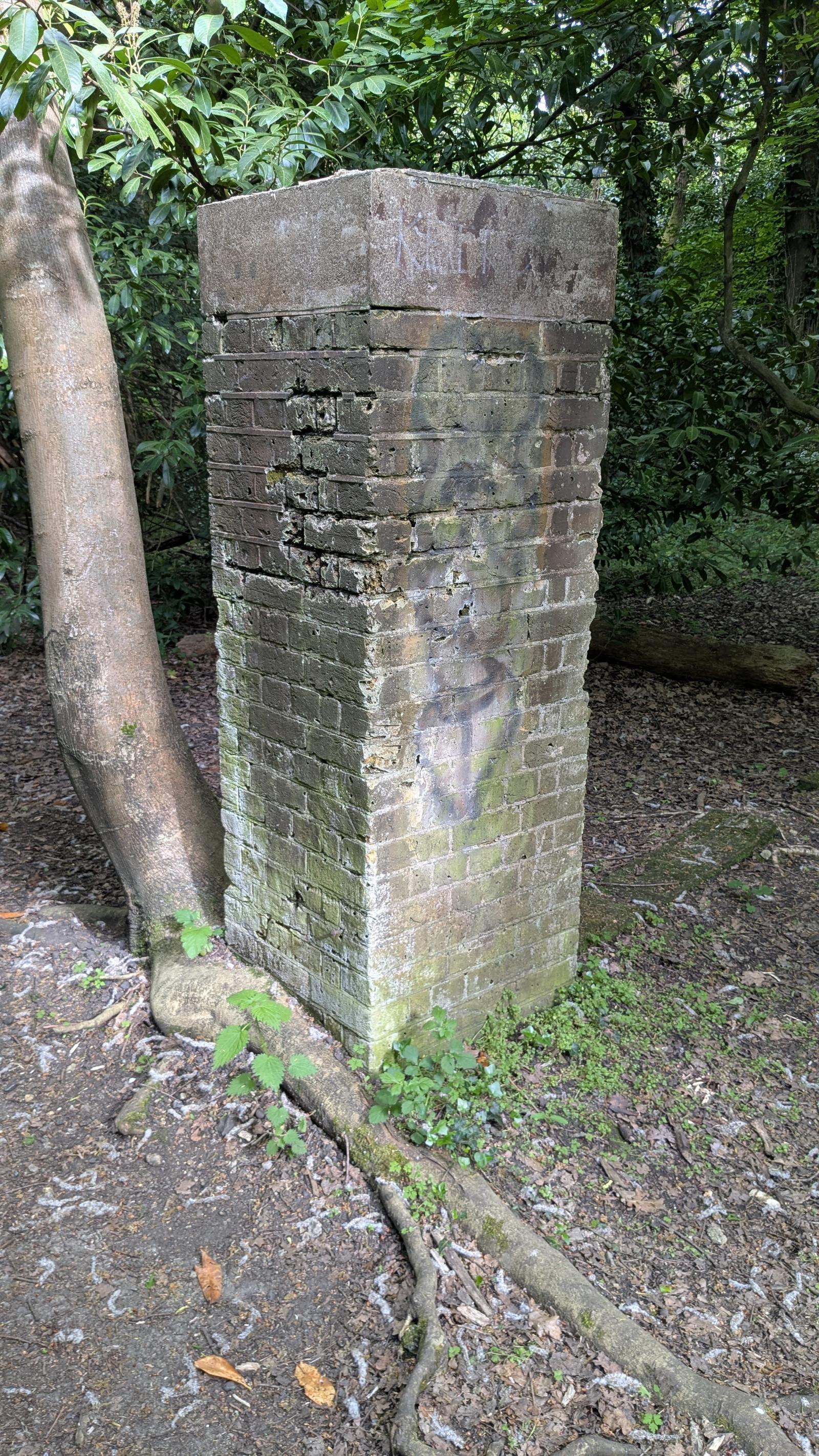
Because, truth be told, I had noticed some old ruins in the forest before. Concrete walls, crumbling and overgrown. Half-hidden structures tucked away just enough to escape attention. I’d seen them many times. I’d even wondered what they were.
But I never followed the thread.
I assumed they were abandoned utility buildings, perhaps related to forestry or storage. I carried that assumption every time I walked past, and so the idea of a hospital never even crossed my mind.
Later that evening, curiosity got the better of me. I looked it up. And to my surprise, it was real, a smallpox isolation hospital, shut down in 1956. The ruins I’d passed again and again? That was it. That was the hospital the strangers were looking for.
And suddenly, everything looked different.
The forest hadn’t changed. The ruins hadn’t moved. But their meaning had. My assumptions shifted, and in doing so, they reshaped my perception. I hadn’t lacked knowledge, I’d lacked the framing that would’ve made it click.
But there’s another layer.
The hospital itself was born from assumptions, societal ones. In the mid-20th century, smallpox was feared and incurable. The belief was simple: isolate the infected. Out of sight, away from others. Protect the population through containment.
No treatment. No integration. Just distance, walls, and waiting.
That belief shaped not just medical policy, but the landscape itself. These hospitals were tucked away, forgotten as medicine moved on. But the logic lingered, in geography, in silence, in the ruins themselves.
And then it struck me:
If those strangers had simply asked me, “Do you know where the ruins are?”, I could have helped. I did know. I’d seen them. I could’ve walked them straight there.
But they asked for a hospital. And in my version of the forest, there was no hospital. So I thought they were wrong.
We were both holding pieces of the truth. But we didn’t share the assumptions needed to connect them.
That’s when I realised: Shared assumptions are necessary for communication. Without them, even when knowledge exists, it can’t be exchanged. It’s not about ignorance, it’s about misalignment. Two maps, no bridge.
This is what assumptions do. They don’t just filter reality, they construct it. And sometimes, what’s invisible isn’t hidden at all. It’s just named something else.