The Big Mac Illusion: How a Slice of Cheese Exposed My Hidden Assumption
The Big Mac Illusion: How a Slice of Cheese Exposed My Hidden Assumption
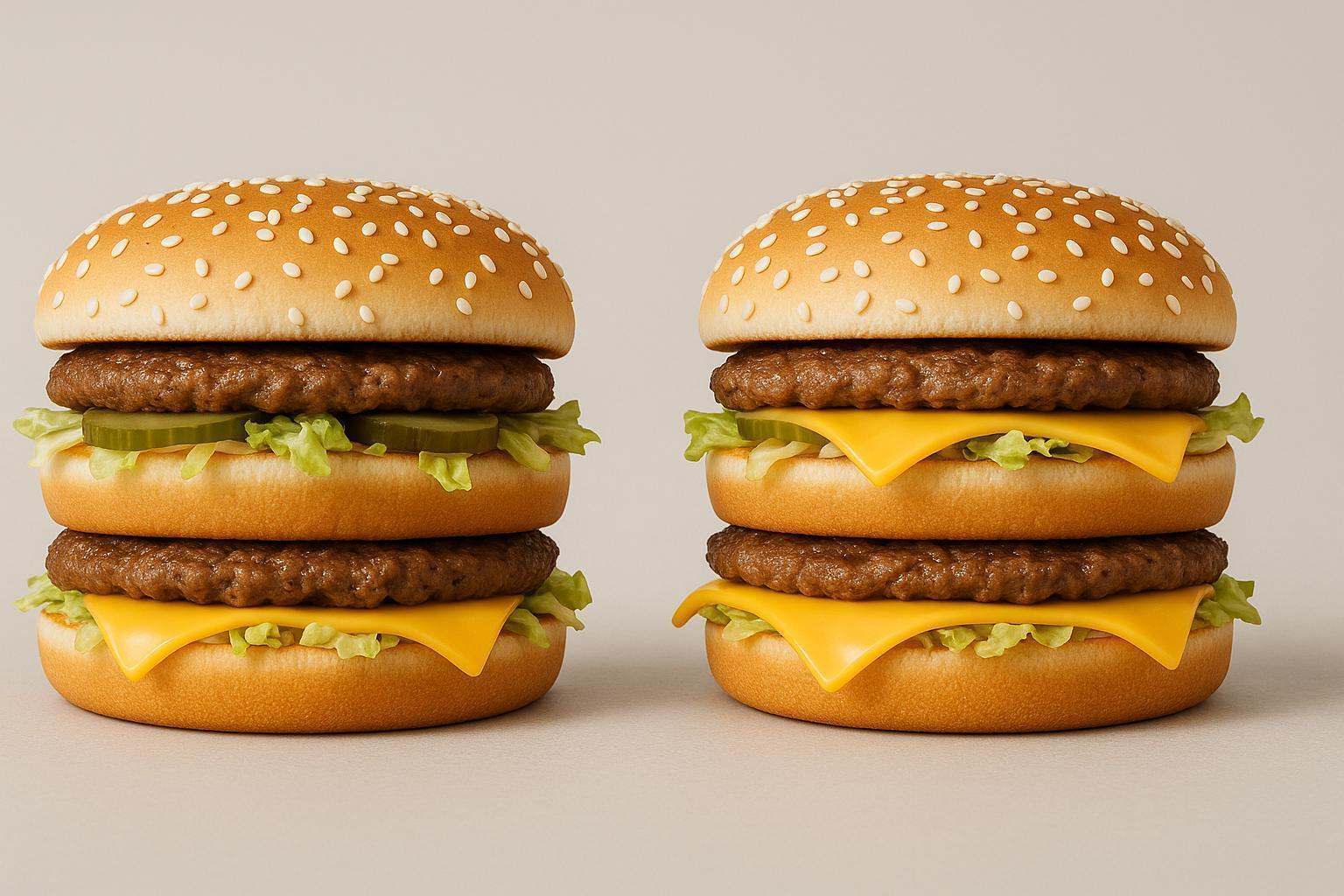
It started innocently enough. I was drafting an article on something seemingly trivial: the difference between a Big Mac with cheese and one without. To illustrate it visually, I asked ChatGPT to generate an image of both versions.
Simple request, right?
But as I stared at the images, something didn’t sit right. The cheese-free Big Mac looked… off. I started tweaking the prompt: “Give me a Big Mac, a real one, with cheese.” But the images kept coming out with only one slice of cheese. After a few iterations, and growing frustration, I said, “Give me a real Big Mac with two pieces of cheese.”
That’s when ChatGPT corrected me:
A classic Big Mac officially includes one slice of cheese, typically placed between the bottom patty and the middle bun. However, many expect or assume there are two slices because of the double-patty structure.
I paused. Wait, what? Two beef patties, but only one slice of cheese?
Surely that can’t be right.
Just to be safe, I went to the official McDonald’s website. And there it was, plain as day: two patties, one slice of cheese, nestled beneath the bottom patty.
I’ve eaten dozens of Big Macs over the years, but this was the first time I actually thought about it. In my mind, the symmetry was obvious: two patties, two slices of cheese. Simple.
It wasn’t until I saw the image comparison, one with cheese, one without, that I noticed what was missing. My brain had assumed the cheese should go with each patty. I’d never even questioned it.
This wasn’t just about burgers. It was about how we layer assumptions onto the world.
I expected symmetry because it felt right. One patty gets one slice, so two patties should mean two slices. That logic feels natural. But it wasn’t reality.
Honestly, I’m more of a Double Whopper with bacon kind of person. And for any hardcore McDonald’s fan, the fact that the Big Mac only has one slice of cheese isn’t surprising, it’s just a fact.
So what can we actually learn from this?
It’s not about the cheese. It’s about the process: the moment when your internal mental model, based on unexamined assumptions, clashes with reality. That mismatch triggers a correction. And that correction is thinking.
Thinking is the act of introducing, reordering, and revising assumptions.
Whether it’s a burger, a business decision, or a belief, you only see clearly when you question what you thought you already knew.
P.S. If you noticed something off about the cheese quote, congratulations, you’ve already begun the practice of Assumptology.