Which Big Mac has no cheese?
Which Big Mac has no cheese?
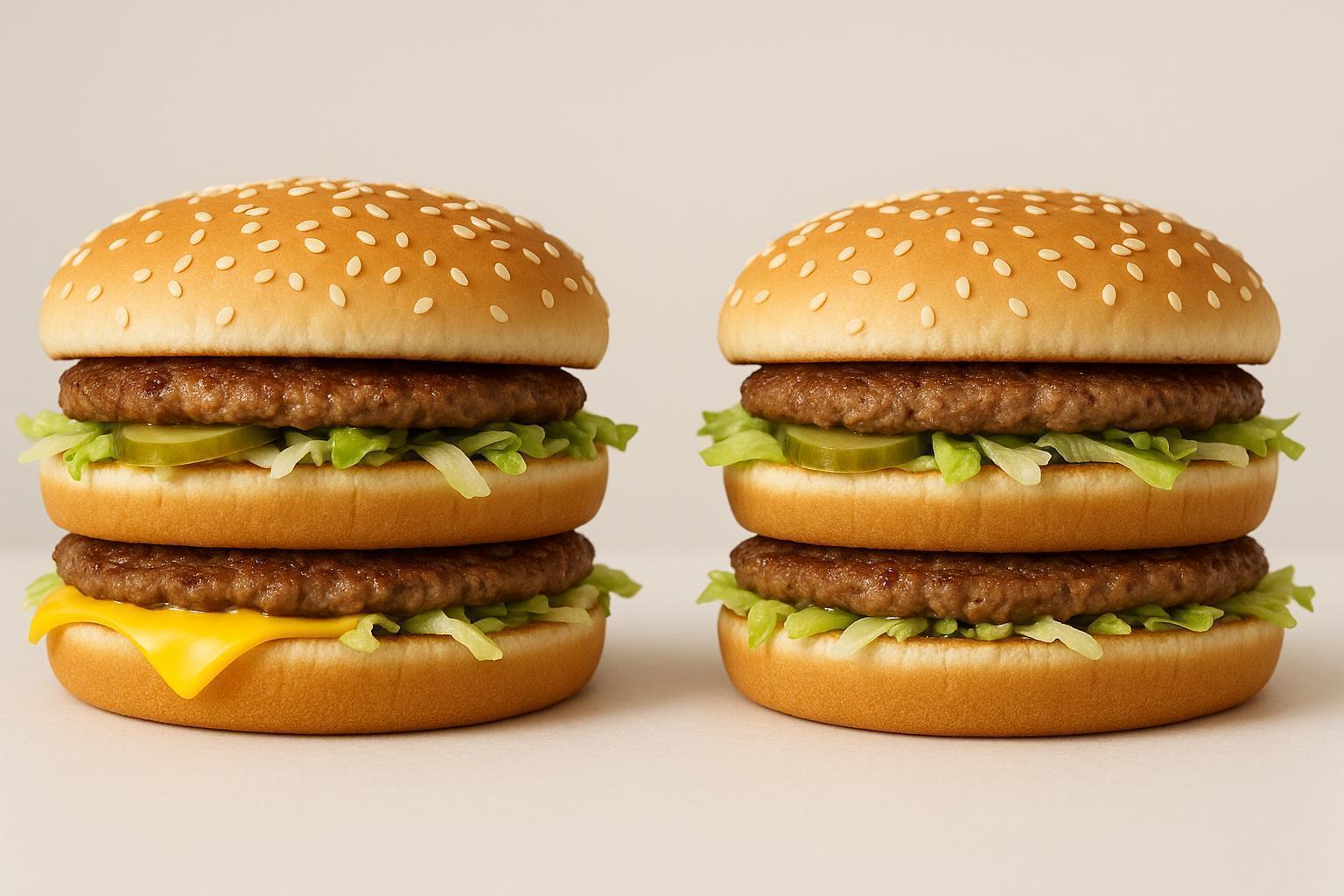
Even a Big Mac Can Reveal the Structure of Thought After a long day of outdoor adventures at Diggerland in Kent, where we drove diggers, spun in tractors, and took command of heavy machinery, we were hungry and tired.
So we stopped at the nearby McDonald’s.
We ordered using the self-service machine. Three burgers: a Filet-O-Fish for my wife, a Big Mac for me, and another Big Mac, without cheese, for my son. “He doesn’t like cheese,” my wife reminded me.
So I tapped through the menu, customized the burger, and hit “No Cheese.” That one was for him. When the food was ready, it came in two brown paper bags, one with fries, the other with the burgers.
Inside were three boxes. The Filet-O-Fish was easy to spot in that it was in a different box. But I assumed the two Big Mac boxes would be identical.
My wife looked inside, pulled one out, and handed the other to me. “This one is yours,” she said. I asked, “How do you know?”
She showed me the box in her hand. “This one has a sticker, No Cheese. So the one without the sticker is yours.”
That was enough. We trusted the label, and ate.
But later, I thought about how we knew which burger was which. Because even if I had checked, opened the boxes, examined the contents, what could I really say?
I don’t see cheese. I don’t taste cheese.
But could I be certain?
No, I assume it.
- I assume the machine got the order right.
- I assume the kitchen followed it.
- I assume the sticker was placed on the correct box.
- I assume we interpreted that sticker correctly.
But those assumptions? We don’t question them, because they feel “good enough.”
That’s the hidden truth behind logic, decision-making, and even ordinary trust:
We don’t build on certainty. We build on assumptions, and we stop questioning when they feel stable enough to act on.
This is Assumptology: The study of how assumptions shape what we believe, what we do, and what we call truth.
Even a Big Mac, ordered from a machine, can reveal the entire structure of thought.